
Bathrooms put more stress on paint than almost any other room in the house. Steam from showers, splashes around sinks, and limited airflow all work against walls, ceilings, and cabinets day after day. That is why choosing the best paint for bathroom walls and ceiling is less about trends and more about how the space actually functions.
The right paint helps control moisture, limits mildew, and keeps surfaces looking clean instead of worn down. This matters even more when cabinets are involved, since they get constant use and frequent wipe-downs.
Below, we break down how professionals think through paint choices for bathroom walls, ceilings, and cabinets so the finish holds up and still looks good over time.
Key Takeaways:
- The best paint for bathroom walls and ceiling must handle humidity, frequent cleaning, and daily moisture exposure without breaking down.
- Satin and semi-gloss finishes perform best on bathroom walls, balancing cleanability and moisture resistance.
- Bathroom ceilings last longer with satin or semi-gloss paint instead of flat finishes that absorb moisture.
- Cabinets need stronger adhesion and harder finishes than walls due to constant handling and wipe-downs.
- Proper surface prep and primer choice directly affect how long bathroom paint holds up over time.
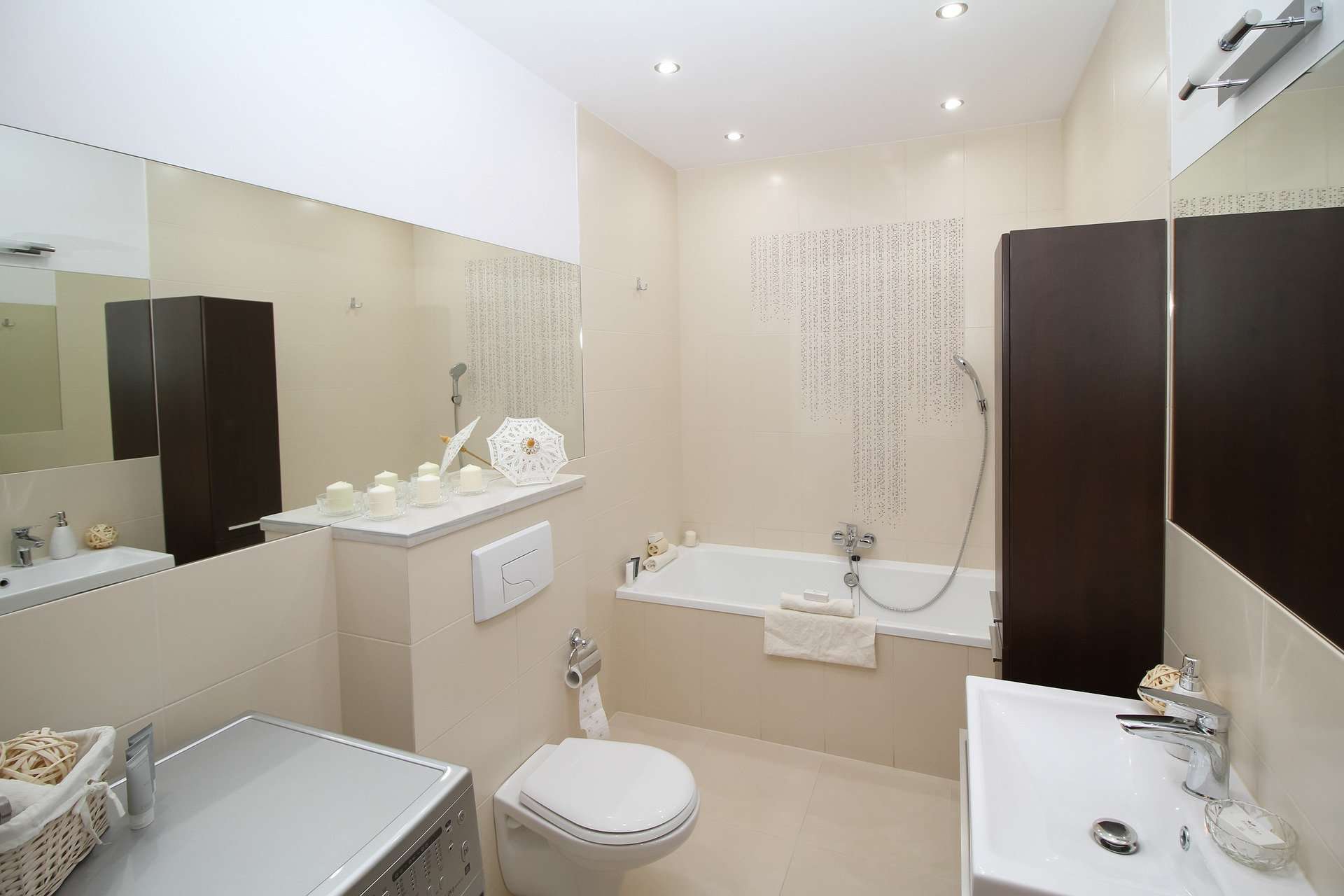
Why Bathrooms Break Down Paint Faster Than Other Rooms
Bathrooms trap moisture. Even with a fan, humidity lingers on walls, ceilings, trim, and cabinets. Over time, that moisture can lead to mildew, peeling, dull color, and soft coatings that do not clean well.
Cabinets feel this first. Hands are wet. Doors get wiped often. If the paint lacks strong adhesion or the right sheen, it fails fast. The same logic applies to ceilings, which collect steam that rises and settles after hot showers.
Start With The Surface Before Thinking About Paint
Paint performs only as well as what is underneath it. Bathrooms often have glossy coatings already in place, patch repairs, or bare drywall from updates.
Common bathroom surfaces include:
- Previously painted drywall with a satin or gloss finish
- New drywall that has never been sealed
- Wood cabinets with factory finishes
- The trim has layers of older paint
Each surface needs proper prep and priming so the final coat bonds correctly. Without that, even high-quality paint struggles in humid conditions.
Why Primer Matters More In Bathrooms And Cabinets
Primer does more than block stains. In bathrooms, it controls moisture movement and improves adhesion. For cabinets, it helps paint grip slick factory finishes and resists peeling from frequent contact.
A moisture-resistant primer helps:
- Reduce bubbling and peeling
- Improve adhesion on glossy surfaces
- Limit mildew growth in damp areas
- Create a uniform base for consistent color
New drywall benefits from drywall primer so the surface does not absorb paint unevenly. Cabinets often need bonding primers designed for wood and previously coated surfaces. This step sets the foundation for the best paint for bathroom walls and ceiling to do its job.
Water-Based Paint Vs Oil Based Paint In Bathrooms
Most bathroom walls and ceilings perform best with water-based latex paint. It dries faster, cleans with water, and releases fewer volatile organic compound emissions during curing.
Latex paint works well because:
- It resists moisture once cured
- It flexes slightly with temperature changes
- It is durable and washable
- It maintains color stability over time
Oil-based paint still has a place, mainly on cabinets and trim that see heavy use. It cures harder and resists wear well. The tradeoff is longer drying time, higher odor, and potential yellowing over time. For many homeowners, modern cabinet coatings have replaced traditional oil paint while keeping durability high.
Choosing The Right Finish For Bathroom Walls
Sheen plays a major role in how bathroom paint performs over time. It affects how well surfaces handle moisture, how easy they are to clean, and how much texture or patchwork shows through once the paint dries.
Below is a clear breakdown of the most common finishes used on bathroom walls and where each one makes sense.
Satin Finish
Satin is one of the most common choices for bathroom walls. It has a soft sheen that reflects light without looking shiny, which helps walls feel cleaner and more open.
This finish handles humidity well and cleans easily with light wiping. Satin works especially well in full bathrooms where moisture is present but not constant on every surface. It does show some surface flaws, though less than glossier options.
For a closer comparison on where satin fits best, satin paint vs. matte paint explains how sheen affects durability in moisture-prone rooms.
Semi-Gloss Finish
Semi-gloss offers stronger moisture resistance than satin and holds up better to frequent cleaning. This finish sheds water more efficiently, making it a solid option for bathrooms with heavy daily use.
The tradeoff is appearance. Semi-gloss reflects more light and can highlight wall imperfections, seams, or patch repairs. It works best when surfaces are smooth and well-prepped.
If you are weighing satin against semi-gloss, eggshell vs. semi-gloss paint breaks down how higher sheen levels impact both performance and look.
Eggshell Finish
Eggshell sits between flat and satin, offering a slight sheen with a softer appearance. In bathrooms, eggshell can work in low-humidity spaces like powder rooms with minimal moisture exposure.
It does not clean as easily as satin or semi-gloss and can wear down faster in steamy environments. For full bathrooms, eggshell is usually not the first choice unless paired with strong ventilation and limited moisture.
Flat Or Matte Finish
Flat and matte finishes are the least durable in bathrooms. They absorb moisture more easily and do not respond well to cleaning, which can leave shiny spots or streaks.
These finishes may work in half baths with no shower or tub, but even then, product selection matters. In most full bathrooms, flat paint leads to early wear and visible staining on walls.
Ceiling Paint Choices That Prevent Stains And Mildew
Ceilings take the brunt of rising steam. Regular flat ceiling paint often fails here. It absorbs moisture and shows stains over time.
Satin or semi-gloss ceiling paint performs better because:
- It resists mildew growth
- It handles condensation without staining
- It cleans more easily than flat paint
Powder rooms with limited moisture can use satin finishes comfortably. Full bathrooms with showers benefit from semi-gloss ceilings for long-term durability. This choice plays a major role in selecting the best paint for bathroom walls and ceiling as a complete system.
Cabinet Paint Requires A Different Level Of Durability
Bathroom cabinets are high-contact surfaces. Hands, towels, and cleaning products all test the coating daily.
Cabinet paint needs:
-
Strong adhesion to wood or existing finishes
-
A hard-cured surface that resists scratches
-
A finish that cleans without dulling
Most cabinet coatings use advanced water-based formulas designed for trim and doors. These offer durability similar to oil paint without the downsides. Gloss or semi-gloss finishes work best since they repel moisture and wipe clean easily.
Color choice also matters. Lighter shades show wear less, while darker colors highlight fingerprints. Tools like a paint color visualizer help narrow options before committing to a full repaint.
How Color Choice Impacts Bathrooms And Cabinets
Color affects more than style. Light reflects differently in humid spaces, especially with glossy finishes.
Lighter colors:
- Make small bathrooms feel more open
- Reflect light off satin and gloss finishes
- Show fewer water spots
Darker colors:
- Add contrast and depth
- Require smoother surfaces
- Highlight sheen and texture more clearly
Bathrooms often surprise homeowners once paint dries. Understanding does paint dry darker or lighter helps set expectations and avoid disappointment after installation.
Common Mistakes That Shorten Paint Life In Bathrooms
Even quality paint can fail if choices do not align with the space.
Frequent issues include:
- Using flat paint in high-humidity bathrooms
- Skipping moisture resistant primer
- Applying wall paint on cabinets
- Choosing finishes that highlight surface flaws
- Ignoring ventilation patterns in the room
Avoiding these mistakes protects your investment and keeps the best paint for bathroom walls and ceiling performing as intended.
Final Thoughts On Choosing Paint That Lasts
Selecting the best paint for bathroom walls and ceiling comes down to moisture control, surface prep, and the right finishes for each area. Cabinets require the highest durability, followed by ceilings and walls. Satin and semi gloss finishes strike the right balance between appearance and performance in most bathrooms. Primer is never optional in these spaces. When all pieces work together, the result stays clean, durable, and consistent for years.
How JC Custom Painting LLC handles bathroom and cabinet painting:
- Evaluate surfaces, moisture levels, and ventilation
- Select primers and coatings designed for bathrooms and cabinets
- Prep cabinets, walls, ceilings, and trim for proper adhesion
- Apply durable finishes with consistent coverage
- Focus on long term performance, not short-term looks
If you are planning a bathroom update and want guidance from experienced painters, JC Custom Painting LLC serves Great Falls, McLean, Vienna and the surrounding areas.
Call us at 571-575-6818 for a FREE estimate and clear recommendations that fit your space.